
History of Wentworth [NC]
Wentworth, North Carolina: The Town Built to Govern a County
Wentworth, North Carolina: The Town Built to Govern a County
Wentworth is an unusual North Carolina town. It has never been the largest community in Rockingham County, and it did not become famous for a major textile mill, tobacco company, railroad, or manufacturing industry. Its importance came from something more fundamental: government.
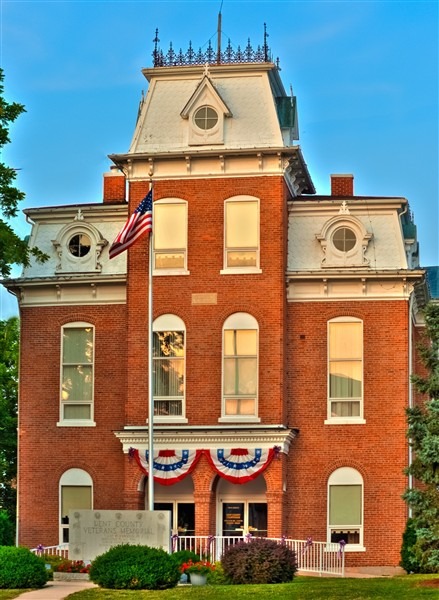
For more than two centuries, Wentworth has served as the center of public life in Rockingham County. The courthouse, county offices, courts and other governmental institutions have given the small community a role far greater than its size might suggest.
The story of Wentworth begins with the creation of Rockingham County itself.
A New County
Rockingham County was created by the North Carolina General Assembly on December 29, 1785, from the northern portion of Guilford County. The new county was named for Charles Watson-Wentworth, the second Marquis of Rockingham, who had served as British prime minister. He was known in the American colonies for opposing the Stamp Act and for supporting recognition of American independence.
The area that became Rockingham County already had a long history. Indigenous people, including the Saura, or Cheraw, had lived in the region before European settlement. Later settlers included people of English, German and Scotch-Irish backgrounds. Farms and scattered settlements spread across the Piedmont countryside, but the newly created county needed something it had not previously required on the same scale: a permanent center of government.
The first county court did not meet in Wentworth. In 1786, the first session of the Rockingham County Court of Pleas and Quarter Sessions was held at the home of Adam Tate at Eagle Falls, on the south side of the Dan River.
The county then began looking for a more permanent location.
A new county seat
In 1787, land belonging to Constantine Perkins and Charles Gallaway was selected for the county seat. The location was near the center of the new county, on a high ridge east of Rockhouse Creek between Bear Branch and Rocky Branch. The location made practical sense: a centrally situated courthouse would give residents from different parts of the county a place to conduct public business.
Public buildings were constructed, and the county court began meeting at the new courthouse in November 1787.
At first, however, the settlement was not officially known as Wentworth.
The post office operated from 1794 to 1827 under the name Rockingham Courthouse, reflecting the community’s principal purpose. The General Assembly formally established the town of Wentworth as the county seat in 1798, and the first court under the Wentworth name was held in 1799.
The name connected the town to the same Charles Watson-Wentworth whose name had been given to the county.
A Courthouse Town
Wentworth developed differently from many of Rockingham County’s other communities.
Reidsville grew into an important commercial and agricultural center. Madison developed around commerce and later became closely associated with tobacco. Mayodan and the communities along the Mayo and Dan Rivers developed strong industrial and textile identities. Other parts of the county developed around farming, transportation and manufacturing.
Wentworth’s identity was different. It was a courthouse town.
People came to Wentworth to go to court, record property transactions, settle estates, conduct county business and deal with the machinery of government. Lawyers, judges, clerks, sheriffs, elected officials and other public employees became part of the town’s daily life.
That role also helped Wentworth survive periods when other small communities changed dramatically.
Its economic importance did not depend on a single factory. Its reason for existing was the county itself.
The County Seat Through Changing Times
During the nineteenth century, Rockingham County changed from a predominantly agricultural frontier county into a more developed Piedmont community. Roads improved, towns grew and agriculture became increasingly commercial.
Wentworth remained at the center of county government.
The courthouse was more than simply a government building. In a nineteenth-century county, it was one of the places where people encountered the larger world beyond their farms and neighborhoods. Elections, court proceedings, property records and other official business brought people together.
For generations of Rockingham County residents, a trip to Wentworth could be an important event.
The town’s history is therefore closely connected to the history of the entire county. The records preserved there document land ownership, marriages, estates, legal disputes and countless other events in the lives of ordinary residents.
Today, Rockingham County’s Register of Deeds maintains records extending back to the county’s earliest years. The county’s historical records include material dating to the county’s origins in the eighteenth century.
The Twentieth Century
The twentieth century brought enormous changes to Rockingham County. Textile mills expanded. Tobacco became an important part of the regional economy. Manufacturing communities grew, and transportation improved. Towns such as Reidsville, Madison, Mayodan and the communities that eventually became Eden developed economic identities of their own.
Wentworth remained something different.
It continued to serve as the governmental center even as the population and economic power of the county shifted toward other communities.
Rockingham Community College also became part of Wentworth’s story. The college was established in 1966 and remains located in the town.
Wentworth itself was incorporated in 1998, more than two centuries after the location had first been selected for the county’s courthouse.
That late incorporation is an interesting part of Wentworth’s history. The community had functioned as the county seat for roughly two hundred years before becoming an incorporated town.
Wentworth Today
Wentworth remains the seat of Rockingham County and the center of county government. The county describes it as the hub of governmental activity, with the courthouse, governmental facilities and offices serving county, state and federal functions.
The town has also developed an appreciation for its historic identity. The Museum and Archives of Rockingham County occupies the old courthouse building, helping preserve the records and stories of the people who lived in the county before the modern era.
Wentworth Park has added another public gathering place to the community, while the courthouse area remains a visible reminder of the town’s original purpose.
Perhaps the most important thing about Wentworth is that its history cannot really be separated from Rockingham County’s history. It was created because a new county needed a center. It survived because that center continued to matter.
And while other Rockingham County towns became known for mills, tobacco, railroads, farming or commerce, Wentworth remained the place where the county came together to govern itself.
That is why Wentworth occupies such an interesting place in the history of the Dan Valley region. It was never built around a single industry or a spectacular natural resource. Its importance came from its position, its courthouse and the people who have conducted the public business of Rockingham County there for more than two hundred years.
Wentworth was, and remains, the county seat—but its deeper story is about why communities need a center, and how a small town can become the institutional heart of an entire county.
See information about town services and events.