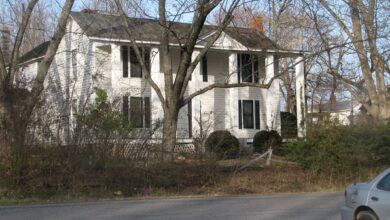
History Of Danville [Va]
The History of Danville, Virginia
Danville, Virginia, grew from a small settlement beside the Dan River into one of the most important communities in southern Virginia. Its history is closely tied to the river, tobacco, railroads, textiles, the Civil War and the movement of people and goods between Virginia and North Carolina.
Today Danville sits just a few miles north of the North Carolina border, but its location along the Dan River has been important for centuries.
Before Danville
Long before European settlers arrived, the Dan River valley was home to Native American peoples. The land around present-day Danville was associated with the Occaneechi Band of the Saponi Nation and their Siouan ancestors. Archaeological evidence, including artifacts and fishing structures, documents their presence along the river.
European settlement came gradually during the eighteenth century. One of the early settlers was Colonel William Wynne, who moved his family to the area around 1753 after receiving a large land grant.
The river was particularly important at a place known as Wynne’s Falls. The water was shallow enough there to make crossing the Dan River relatively easy. The combination of a river crossing and settlement created the beginnings of the community that would eventually become Danville.
Tobacco Creates a Town
Danville’s transformation began with tobacco.
In 1793, the Virginia General Assembly authorized a tobacco inspection warehouse at Wynne’s Falls. The settlement was subsequently known as Danville. The tobacco warehouse was more than simply a storage building. It connected local farmers with a growing commercial market and helped establish the economic purpose that would dominate Danville for generations.
Tobacco grown throughout southern Virginia and nearby parts of North Carolina flowed toward Danville. The town became a center for inspecting, storing, selling and shipping tobacco. By the nineteenth century, Danville was becoming the center of a large tobacco-trading region.
An important development came in 1833, when Danville received an official city charter. The community continued to expand as tobacco commerce brought merchants, warehouses, workers and money into town.
The Railroad Changes Everything
The next great change came with the railroad. Construction of the Richmond and Danville Railroad began in the 1840s, and the railroad reached Danville in the following decade. The connection gave local tobacco producers and merchants a much more efficient way to move their products to distant markets.
The railroad also changed Danville’s importance. The city was no longer dependent solely on the river and wagon roads. It became part of a growing transportation network connecting southern Virginia with Richmond, North Carolina and points beyond.
By the beginning of the Civil War, Danville had a population of roughly 3,500 and had become the capital of a large Southside Virginia tobacco empire.
Danville and the Civil War
The Civil War changed Danville almost overnight. The city’s distance from the major battlefields of Virginia initially provided a measure of protection. At the same time, its railroad and industrial infrastructure made it valuable to the Confederacy.
Tobacco warehouses were converted for military purposes. Danville became home to hospitals, an arsenal, supply facilities and prisons. Clothing and weapons were produced in the city, while the railroad moved supplies and people throughout the Confederacy.
Thousands of sick and wounded Confederate soldiers were treated in Danville. The city also held thousands of Union prisoners in converted tobacco warehouses. The conditions in the prisons were harsh, and many prisoners died from disease, exposure and inadequate conditions.
But Danville’s most famous Civil War moment came in April 1865. When Richmond fell to Union forces on April 2, the Confederate government fled south. President Jefferson Davis and members of his cabinet traveled by railroad to Danville, arriving on April 3. For a brief period, Danville became the seat of the Confederate government.
Davis stayed at the Sutherlin Mansion, while government business was conducted elsewhere in the city. Danville’s railroad connection and its location inside Virginia made it one of the last places where the Confederate government attempted to continue functioning.
The hope did not last. Robert E. Lee surrendered the Army of Northern Virginia at Appomattox Court House on April 9. News of the surrender reached Davis in Danville the following day. The Confederate government left Danville soon afterward and continued southward. Danville’s brief role as the final Confederate capital lasted only days, but it permanently became part of the city’s history.
Tobacco and Textiles
The end of the Civil War did not end Danville’s economic importance. Instead, tobacco continued to drive the city’s growth. New warehouses appeared, and Danville became one of the major tobacco markets in the South. A distinctive auction system known as the Danville System helped establish the city as an important tobacco center.
Then another industry began transforming the city: textiles.
In 1882, local businessmen established the company that became Dan River Mills. Textile manufacturing expanded dramatically during the following decades. Mills along the Dan River took advantage of water power and later electrical power to produce cotton fabrics.
Danville was increasingly becoming a manufacturing city as well as a tobacco city.
One of the city’s large textile operations was Riverside Cotton Mills. Its Number Six Mill began producing cloth in 1895 and eventually became one of the largest cotton mills in the South. The textile industry would eventually become the largest employer in Danville.
A Complicated Reconstruction Era
The years after the Civil War were not simply a period of economic recovery. They were also years of major political and social change.
Danville developed a substantial Black majority during the late nineteenth century. Black residents established churches, schools and community organizations and became active in local politics.
During the 1880s, the biracial Readjuster movement gained political power in Danville. Black citizens were elected to public office and appointed to positions including police work.
The political changes produced a strong reaction among opponents of the Readjusters. In November 1883, a violent confrontation known as the Danville Riot took place during an election period. Five men were killed, four of them Black. A subsequent U.S. Senate investigation attributed responsibility to white participants, although no charges resulted.
The events reflected the larger struggle over political power, race and citizenship that was taking place throughout the South after Reconstruction.
The Twentieth Century
During the twentieth century, Danville became increasingly identified with Dan River Mills and the textile industry. At its peak, Dan River Mills employed more than 18,000 people in 1956. Tobacco also remained a major part of the local economy. In 1960, Danville had thirteen tobacco warehouses and eight receiving plants and was described as Virginia’s largest tobacco market.
For generations, these industries provided jobs and helped shape the city’s neighborhoods, architecture and culture. But the economic foundation eventually began to change.
Foreign competition, changes in manufacturing and the decline of the American textile industry gradually reduced the importance of Dan River Mills. Tobacco also declined as a dominant local industry. The large factories and warehouses that had once represented Danville’s prosperity increasingly became reminders of an earlier industrial era.
Danville Today
Modern Danville is still closely connected to its past. The Dan River remains at the center of the city, although its role has changed from transportation and industrial power to recreation and redevelopment. The former tobacco and textile districts have become important parts of the city’s historic landscape.
Riverfront Park occupies an area associated with Wynne’s Falls, where the early settlement began. The city now uses the riverfront for recreation and public space while interpreting the history of tobacco and industry that developed there. Danville also preserves the story of its railroad and industrial past, its Civil War history and the complicated racial and political history of the nineteenth and twentieth centuries.
Perhaps the most interesting thing about Danville is how many different histories meet in one place.
- It began with a river crossing.
- Tobacco turned that crossing into a commercial community.
- The railroad turned the community into a regional transportation center.
- The Civil War briefly made it the last capital of the Confederacy.
- Textiles transformed it into an industrial city.
And the decline of those industries has forced modern Danville to find new uses for the buildings, riverfront and infrastructure left behind.
The city has therefore never had just one identity.
Danville is a river town, a tobacco town, a railroad town, a textile town and a historic Virginia city. Its location on the Dan River also makes it part of the larger story of the Dan Valley—a region whose history crosses the modern Virginia-North Carolina border.
That connection is still visible today. The river that helped create Danville continues southward into North Carolina, linking communities that developed on both sides of the state line.
Danville’s history is, in many ways, the history of a place continually reinventing itself while remaining connected to the river and transportation routes that made its growth possible in the first place.
Cultural and Historical Landmarks
-
Langhorne House – home of Lady Astor, the first woman in the British Parliament.