History of the Saura Indian Tribe
The Saura Indians of North Carolina (Upper Piedmont)
The Saura Indians (often written Sauras in early English records) were a small Native American tribe who lived in the upper Piedmont region of present-day North Carolina during the late 1600s and early 1700s. They appear briefly in colonial sources and then disappear as a distinct people, making them one of the more obscure indigenous groups in North Carolina’s early history.
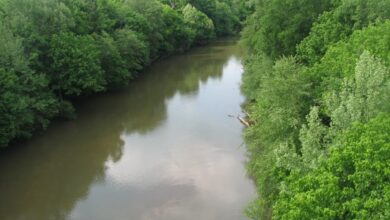
The Saura were located in the foothill Piedmont near the Virginia border, likely along the upper Dan and Yadkin River systems. This region served as a transitional zone between coastal Carolina tribes and the interior Native societies of Virginia. Because of their location, the Saura lived in a vulnerable position, exposed to warfare, disease, and colonial expansion from multiple directions.
Most historians believe the Saura were Siouan-speaking, related linguistically to other Piedmont tribes, though they were politically independent. They lived in small agricultural villages, growing corn, beans, and squash, supplemented by hunting and fishing. Villages were probably palisaded during times of danger, following common Piedmont patterns, but the Saura did not form a large confederacy capable of sustained defense.
The primary documentary reference to the Saura comes from John Lawson, who listed the “Sauras” in his early-18th-century descriptions of inland Carolina tribes. Lawson identified them as a distinct group, not merely a subdivision of a larger tribe. However, records are sparse, and no treaties, reservations, or long-term mission settlements were established with them.
By the early 1700s, the Saura vanish from the historical record. Their disappearance was likely caused by a combination of epidemic disease, slave raids, intertribal warfare, and absorption into neighboring Native communities. Unlike some tribes that migrated together or reorganized politically, the Saura appear to have fragmented, losing their identity as a named tribe rather than being removed as a group.
Importantly, the Saura did not “disappear” biologically. Their descendants were almost certainly absorbed into other Native populations or remained in the Piedmont under different social and racial labels imposed by colonial authorities. Because their documented existence was short and their numbers small, the Saura left no continuous tribal government or clearly traceable modern community.
Today, the Saura are remembered primarily through early colonial accounts and regional archaeology. Their story illustrates how many Native peoples of the Carolina Piedmont were erased from written history not by extinction, but by disruption, displacement, and renaming during the colonial period.
Yes — archaeological and historical records identify at least two major Saura village sites along the Dan River and at the confluence of the Dan and Smith Rivers in the upper Piedmont of North Carolina:
🛖 1. Upper Saura Town
Located along the Dan River near Walnut Cove in present-day Stokes County, NC.
This site occupied by the Saura from roughly the mid-1600s until about 1710.
It was larger and more prominent than the downstream settlement.
The general location aligns with Town Fork Creek and was a chief village for the tribe.
NC DNCR
+1
🛖 2. Lower Saura Town
Located about 30 miles downstream from Upper Saura Town, near present-day Eden in Rockingham County at the point where the Smith River joins the Dan River.
This village is also well documented in colonial maps and later archaeological work.
It, too, was occupied through the 1600s and abandoned by the early 1700s.
NC DNCR
+1
🧠 Summary of Known Villages
📍 Upper Saura Town – higher on the Dan River
📍 Lower Saura Town – near the Dan–Smith River confluence
These two are the principal identified Saura towns documented in both colonial records and archaeological investigations.
NCPedia
🧾 Notes
Some historical interpretations mention additional smaller habitation sites along tributaries of the Dan and Smith Rivers, but only the two main towns are clearly recognized in surviving colonial maps and archaeological research.
danriver.org
Before Saura occupation (as early as AD 1000–1450), earlier Dan River culture sites existed in the region, but those are pre-Saura and belong to ancestral Woodland cultures.
danriver.org
🗺️ How long they were occupied
Both Upper and Lower Saura towns were occupied through much of the 17th century and were abandoned by about 1710–1720, when the Saura people moved south due to pressures from warfare, disease, and colonial expansion.
3333333333333333333333333333333333333333333333333333333333333333333333333333333333333333333333333333333
The Saura Indian Tribe, also known as the Cheraw or Sara, is an indigenous community that historically inhabited the Piedmont region of North Carolina. The tribe had a rich and vibrant culture deeply rooted in their land and traditions.
The Saura people were skilled farmers and hunter-gatherers, utilizing the fertile land around the Yadkin and Dan Rivers. They cultivated crops such as corn, beans, and squash, which formed the basis of their diet. They also hunted game like deer and fished in the rivers to supplement their food resources.
The Saura Tribe had a complex social structure, with each village having a chief or leader who made decisions for the community. They also had a council of elders who provided guidance and wisdom. The tribe had a strong sense of community and cooperation, working together to ensure the survival and well-being of their people.
The Saura people were known for their artistic achievements, particularly their pottery. They created beautiful vessels adorned with intricate designs and motifs, often incorporating symbols from nature such as animals, plants, and celestial elements. Their pottery served both utilitarian and ceremonial purposes, reflecting the aesthetic sensibilities of the tribe.
The Saura Tribe also had a rich oral tradition, passing down their history, legends, and stories through generations. These stories often explained the origins of their people, the relationship between humans and nature, and significant events in their tribal history. They valued storytelling as a way of preserving their cultural heritage and instilling values in the younger members of the tribe.
Unfortunately, the arrival of European colonizers in the 17th and 18th centuries brought significant changes to the Saura Tribe’s way of life. As settlers expanded into their territory, the Saura people faced displacement, violence, and diseases brought by the newcomers.
By the mid-18th century, the Saura Tribe was forced to merge with other neighbouring tribes, losing their distinct identity as a separate tribal entity. Many Saura people assimilated into different communities, adopting the customs and practices of the tribes they merged with.
Although the Saura Tribe no longer exists as an independent entity, their legacy lives on through the efforts of descendants and scholars who strive to preserve and promote their culture and history. The Lumbee Tribe of North Carolina, which consists of various tribal descendants, including the Saura, continues to uphold some of the Saura traditions and serves as a reminder of the once-thriving Saura Indian Tribe of North Carolina.